


Key Takeaways
- Menopause symptoms are common, manageable, and not a reflection of competence.
- Small adjustments to how you structure your day can make a meaningful difference.
- If symptoms are affecting daily functioning, professional support is available.
Menopause is a natural stage of life affecting around half the population, typically between 45 and 55. For many women, perimenopause –the transitional phase which can begin years earlier– is where symptoms first appear. Both stages often coincide with the most demanding phase of a woman’s career, yet they remain among the least discussed workplace challenges.
In many workplaces, particularly in Singapore, menopause is rarely spoken about openly. Women often feel pressure to remain composed and productive without drawing attention to what they’re experiencing. Symptoms such as brain fog or fatigue may feel isolating, even though they’re extremely common.
The good news is that many symptoms can be managed with practical adjustments, lifestyle strategies, and medical support where appropriate.
What Does Menopause at Work Actually Feel Like?
Menopause symptoms tend to become most noticeable in environments that demand sustained concentration, communication, and emotional regulation.
Cognitive symptoms are often the most frustrating, partly because they’re invisible. Many women describe brain fog as feeling like their thoughts are wading through static: familiar words slip away mid-sentence, concentration drifts, and tasks that once felt automatic suddenly require real effort. Losing a train of thought mid-meeting, or finding multitasking more draining than before, are both common experiences.
Physical symptoms add another layer. Hot flashes may occur during presentations or commutes; night sweats can disrupt sleep and leave you exhausted the following day. Headaches, joint aches, or a persistent sense of fatigue can affect stamina across the whole workday.
Emotional changes can be subtler: lower stress tolerance, irritability, anxiety, or dips in confidence that affect communication and decision-making in high-pressure situations.
These changes can affect work performance, but they are not a reflection of competence or commitment.
What Are the Best Strategies for Managing Menopause Symptoms at Work?
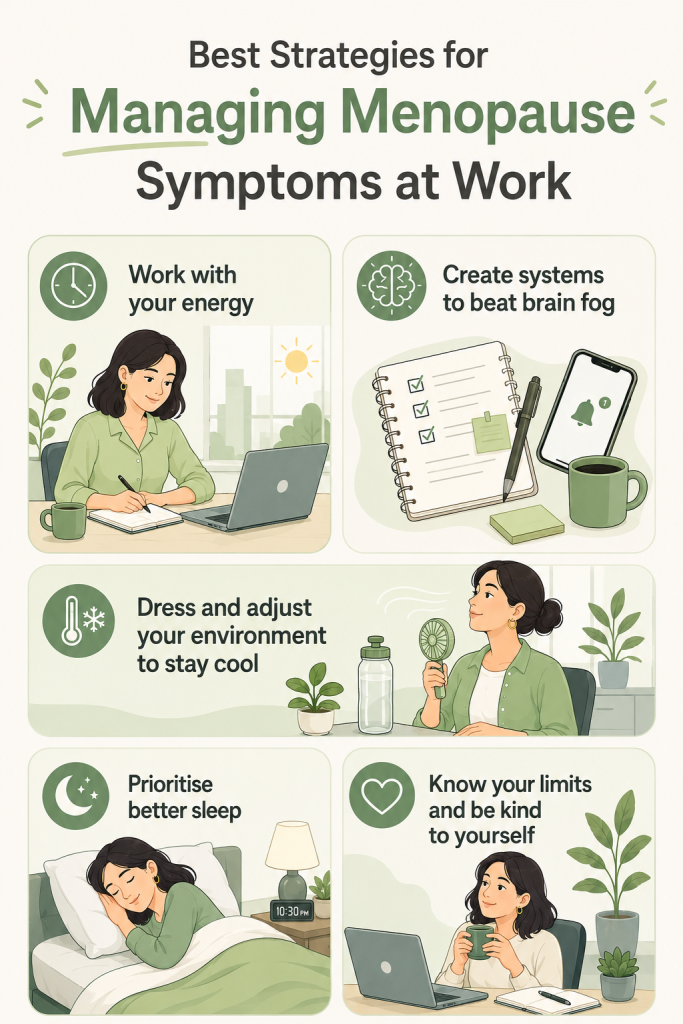
Work with your energy peaks, not against them
Many women notice clearer thinking at certain times of day, often in the mornings. Where possible, schedule demanding tasks and strategic work during these windows, and shift lower-focus tasks, such as admin and email, to lower-energy periods.
Calendar blocking can protect uninterrupted focus time between meetings. Even short breaks away from screens can reset concentration and reduce mental fatigue. Breaking larger projects into smaller steps helps reduce cognitive overload when mental bandwidth feels stretched.
Create systems to manage brain fog
Writing down tasks, keeping detailed meeting notes, and using reminders moves information out of mental storage and onto a reliable external system. Single-tasking is more effective than multitasking during periods of cognitive fatigue. Structured workflows, templates, and checklists reduce decision fatigue. In meetings, a brief pause before responding – or a phrase like “Let me come back to you on that” – creates thinking space without drawing attention.
Dress and adjust your environment to stay cool
Breathable fabrics such as cotton or linen help regulate body temperature. Dressing in layers makes it easier to adapt to sudden changes, particularly when moving between Singapore’s humid climate and heavily air-conditioned offices. A desk fan, strategic seating near airflow, and staying consistently hydrated can all help reduce discomfort.
Prioritise better sleep to manage performance
Sleep disruption is often one of the biggest drivers of reduced performance, affecting attention, memory, emotional regulation, and processing speed. Maintaining a consistent sleep routine and using cooling strategies at night may improve the quality of rest. Reducing caffeine intake in the afternoon can also make a meaningful difference over time. Recognising limits matters too – repeatedly pushing through exhaustion tends to worsen fatigue rather than build resilience.
Do You Need to Tell Your Employer You are Experiencing Menopause?
You do not need to explicitly disclose menopause to advocate for yourself. In many cases, it is more comfortable to focus on practical adjustments or temporary support needs. For example:
- “I’m managing a health-related issue that’s affecting my sleep and energy levels.”
- “I may need to adjust some timelines slightly this week.”
- “I’m reorganising my workload to maintain consistency.”
Keeping conversations solution-focused is often more manageable than discussing personal symptoms in detail, and requesting flexibility does not reflect reduced capability.
Why Is Menopause at Work Still So Under-Discussed in Singapore?
Perimenopause or menopause at work in Singapore remains relatively under-recognised despite affecting many working women. In professional environments where composure and resilience are highly valued, symptoms such as fatigue, anxiety, or brain fog may feel difficult to discuss openly. Some women worry that symptoms could be misunderstood as stress, disengagement, or declining performance.
As awareness around women’s health grows, workplace conversations are slowly becoming more open. Larger organisations and healthcare providers have also started placing greater emphasis on menopause education and support.
When to Seek Professional Support for Menopause and Perimenopause
If symptoms are consistently affecting your work performance, sleep, mood, or daily functioning, it is worth speaking to a professional rather than waiting it out. Many women delay seeking help, assuming what they are experiencing is simply something to push through, but support is available, and it makes a difference.
A women’s health or menopause specialist can assess your symptoms and discuss suitable options based on your individual history. Menopause Hormone Therapy (MHT) is one avenue. It targets symptoms linked to hormonal fluctuation – hot flashes, night sweats, sleep disruption – and some women also notice improvements in concentration and quality of life. That said, it is not suitable for everyone and requires individual assessment. Non-hormonal treatments and lifestyle-based approaches may also be appropriate depending on what you’re experiencing.
Make This Season of Your Life the Best Yet
Many women continue building successful, demanding careers throughout menopause and perimenopause. With the right combination of practical strategies and medical support, symptoms are manageable for most. The goal is not perfection, but in finding more sustainable ways to work with your body rather than against it.
If any of this sounds familiar, consider speaking to a women’s health specialist or booking a menopause assessment. At Prologue Wellness, our team can provide a thorough evaluation, an accurate picture of what you’re experiencing, and a personalised treatment plan to help you manage symptoms and continue performing at your best.

