In Singapore, around 41% of female outpatients experience urinary incontinence, with many cases linked to pregnancy, childbirth, menopause or other health conditions.
Many don’t seek medical advice due to embarrassment or the belief that it’s not serious enough to require therapy.
Urinary incontinence treatment focuses on identifying the underlying cause of bladder control problems and recommending appropriate management based on your symptoms and needs.
Throughout the process, a specialised female care team provides a more comfortable space to discuss sensitive bladder and pelvic health concerns.
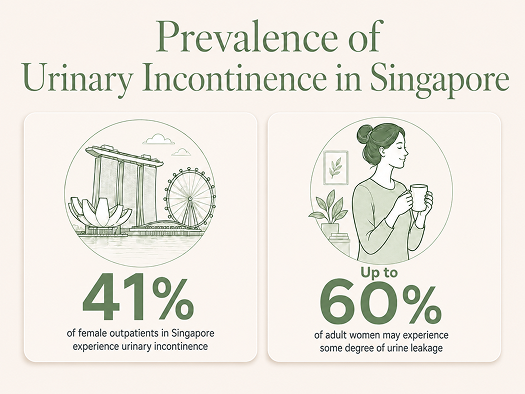
Urinary incontinence refers to the involuntary leakage of urine, ranging from occasional dribbles when laughing or coughing to a sudden loss of bladder control. According to SingHealth, up to 60% of adult women may experience some degree of urine leakage during their lifetime.
Although it becomes more common with age, pregnancy and menopause, it’s not a normal or inevitable part of growing older. The condition can affect women at different stages of life, and while some cases improve over time, others may persist without proper assessment and management.
Seeking medical evaluation can help identify the type and possible causes of incontinence, guiding suitable urinary incontinence treatment in Singapore.
Identifying the type of bladder leakage you experience is an important step, as each type has different triggers and may require a different management approach.
The four main types of urinary incontinence include:
Urinary incontinence has many possible causes, and it isn’t limited to pregnancy or childbirth. Women who have never given birth can also experience bladder leakage.
Common causes include:
Carrying a baby and vaginal delivery stretch the pelvic muscles and nerves supporting your bladder. While pregnancy incontinence is common, urinary incontinence after childbirth often improves gradually as your body heals.
Falling estrogen levels during perimenopause cause the lining of the urethra and bladder to thin and lose elasticity. Reviewing common menopause signs or taking our online menopause quiz may help determine if hormonal changes are affecting your bladder control.
Bladder tissues naturally lose storage capacity and flexibility over time. Although this increases the risk of urinary incontinence, it is not an inevitable part of growing older.
Weakened pelvic muscles can no longer support the bladder securely during movement. Take our brief pelvic floor incontinence assessment to evaluate your current muscle strength.
Extra body weight places continuous pressure on your bladder and pelvic structure. Sustainable, healthy weight loss helps relieve this pressure and improves day-to-day bladder control.
Persistent coughing (from smoking, asthma, or a respiratory condition) and frequent straining during bowel movements put repeated pressure on the bladder and pelvic floor. Constipation can also put pressure on the bladder, increasing the urge to urinate.
Start with a personalised assessment to understand what’s causing your symptoms and discover the treatment that’s right for you.
At Prologue, pelvic floor therapy takes a comprehensive approach, combining hands-on rehabilitation with HIFEM technology through the Emsella chair.
Our main goal of pelvic floor rehabilitation is to help you regain a healthy pelvic floor and resolve the symptoms, pain and inconveniences associated with dysfunctional pelvic floor muscles.
A typical programme includes:
Treatment plans are built around your specific symptoms rather than a one-size-fits-all routine. A trained female care team supports you through the process in a private, judgment-free setting.
Not every case of incontinence is the same, and treatment should be based on the underlying cause and severity of your symptoms. Below is a general guide to the treatment options commonly considered for urinary incontinence treatment in Singapore.
| Condition | Recommended Treatment |
|---|---|
| Mild stress incontinence | Pelvic floor exercises |
| Moderate stress incontinence | Physiotherapy and BTL Emsella |
| Postpartum urinary incontinence | Pelvic floor rehabilitation |
| Menopause-related bladder symptoms | Pelvic floor rehabilitation with hormone assessment, where appropriate |
| Mixed incontinence | A personalised management plan that may combine different treatment approaches |
Bladder control issues are often linked to female anatomy, hormones and different life stages. Our specialised female team provides care with these factors in mind.
Your treatment plan is tailored to your symptoms, lifestyle and health goals. It can be reviewed and adjusted over time as your needs change.
Treatment usually begins with non-surgical options, such as pelvic floor rehabilitation and BTL Emsella, where appropriate. More invasive treatments are considered only when clinically indicated.
Urinary incontinence can have several causes rather than a single one. Common factors include pregnancy, childbirth, menopause, ageing, pelvic floor weakness, excess weight and certain medical conditions that affect bladder control.
Treatment depends on the type and cause of urinary incontinence. Management may include pelvic floor exercises, bladder training, pelvic floor rehabilitation, lifestyle changes or non-surgical treatments such as BTL Emsella, where appropriate.
Urinary incontinence may affect daily activities, exercise, sleep and social confidence. While symptoms vary, appropriate assessment and management can help reduce their impact on everyday life.
Prologue Wellness offers personalised urinary incontinence treatment based on your symptoms and assessment. This may include pelvic floor rehabilitation, BTL Emsella, bladder training, biofeedback, guided pelvic floor exercises and lifestyle support.
This depends on your delivery type and individual recovery. Many women receive medical clearance around six weeks after giving birth, but your doctor will advise when it’s appropriate to begin treatment based on your healing progress.
Your treatment plan will depend on the type and severity of your urinary incontinence. If BTL Emsella is recommended, a typical course is around six sessions, usually scheduled twice a week, although your doctor may adjust this based on your progress.
The length of time results last varies from person to person and depends on the treatment received. For women undergoing BTL Emsella therapy, improvements may last six months or longer, with maintenance sessions recommended where appropriate.